
- Address: Villianur, Puducherry-605110
- Email: sales@napcen.com
NAPCEN · Industrial Equipment Manufacturer · Saudi Arabia Enquiries
Air Pollution Control Equipment Suppliers or Saudi Arabia
Industrial wet scrubber, dry scrubber, dust collector, fume extractor and downdraft table solutions for Saudi Arabia’s petrochemical, refining, mining, cement, metal fabrication, wastewater treatment and industrial manufacturing sectors.
From chemical exhaust treatment to grinding dust collection, NAPCEN helps industrial buyers identify suitable equipment based on airflow, pollutant characteristics, operating conditions and project requirements.
Made in India
Industrial Applications
Custom Equipment Configurations
Technical Sales Support
INDUSTRIAL MANUFACTURER IN INDIA
NAPCEN – Industrial Pollution Control Equipment for Saudi Arabia
NAPCEN is an industrial air pollution control equipment manufacturer based in Puducherry, India. We welcome enquiries from Saudi Arabia for wet scrubbers, dry scrubbers, dust collectors, fume extractors and downdraft tables. Our application-based approach considers gas composition, dust loading, airflow, operating temperature and materials of construction.
Industrial facilities in Saudi Arabia have different emission sources and operating conditions. We review the application, contaminant characteristics, required airflow, installation constraints and materials of construction before recommending an equipment configuration.
Our aim is to support plant engineers, EHS teams, procurement professionals and project consultants with practical equipment selection and technical quotation support.
What this page covers
Five core equipment families, selection guidance, applications, engineering considerations, industrial locations in India, and an inquiry form designed for technical buyers.
Our product portfolio
Wet Scrubber, Dry Scrubber, Dust Collector, Fume Extractor & Downdraft Table Suppliers for Saudi Arabia
Explore NAPCEN equipment families for manufacturing plants, process industries and fabrication facilities. Select the system according to the emission source—not only the equipment name.
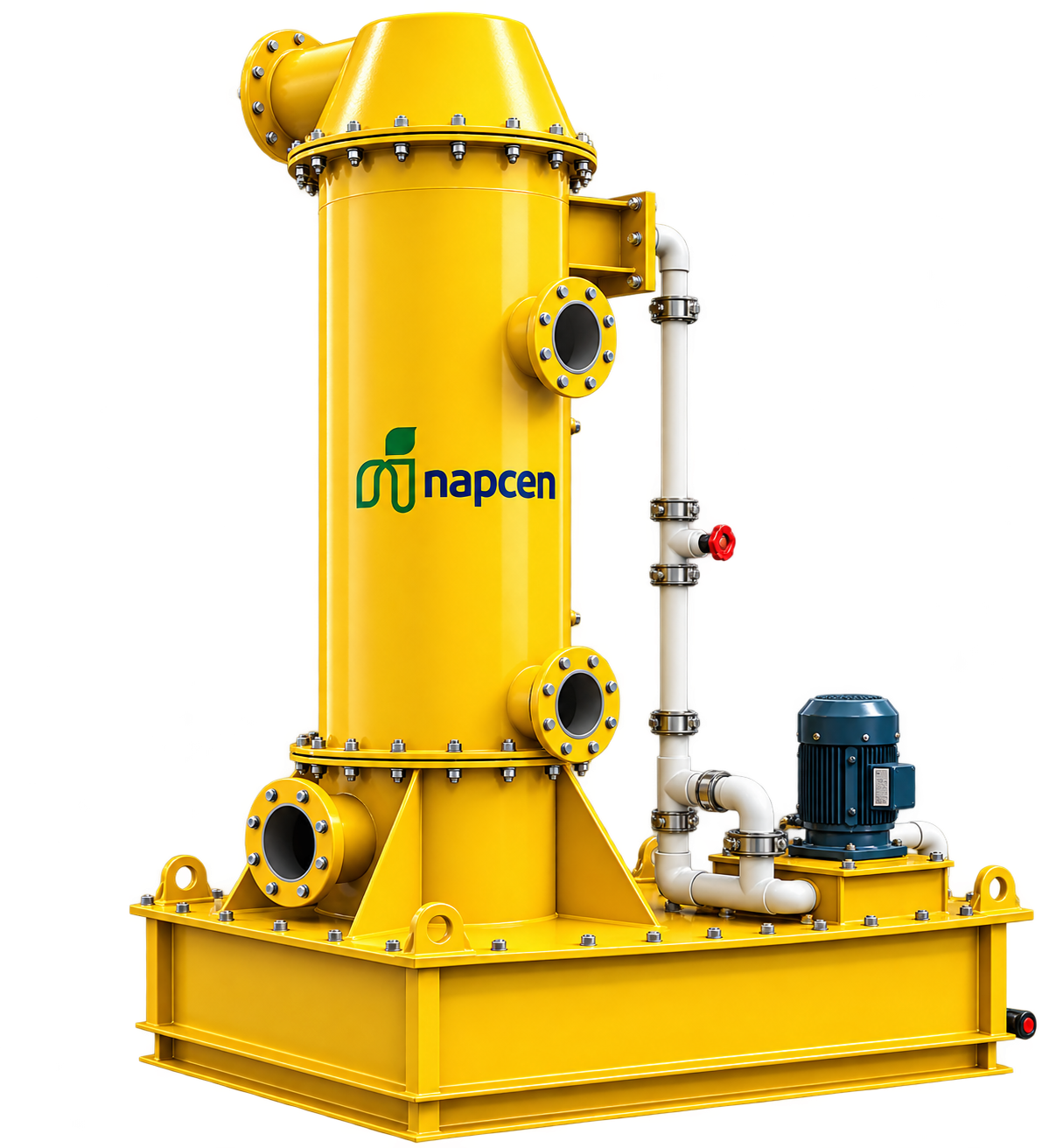
Gas absorption & particulate scrubbing
Wet Scrubbers
Packed bed, venturi, acid fume, HCl, chlorine, ammonia and vent gas scrubber configurations for suitable industrial exhaust streams.
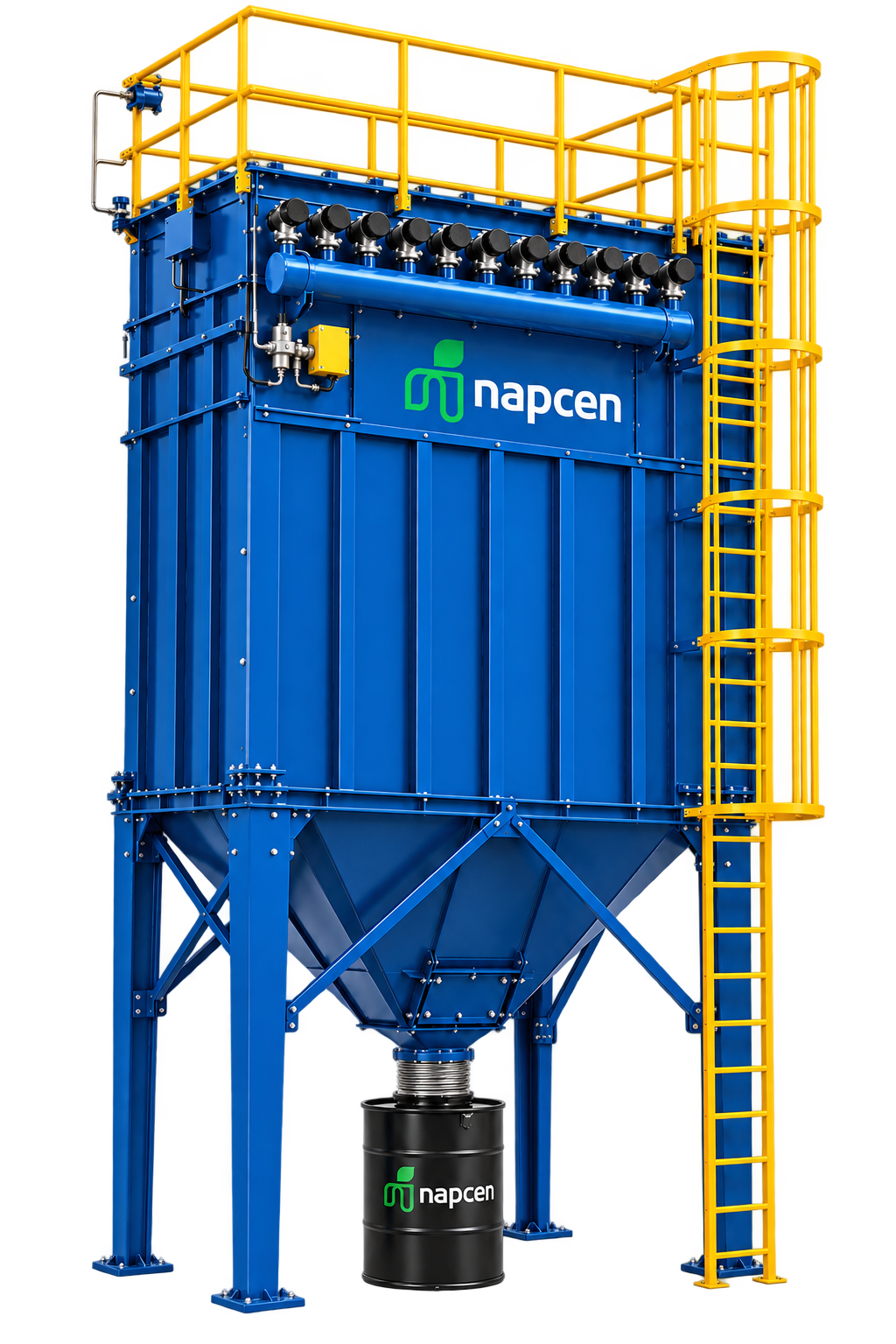
Industrial particulate filtration
Dust Collectors
Pulse jet baghouse, cartridge, cyclone, portable and two-stage dust collection systems for process dust and material handling.
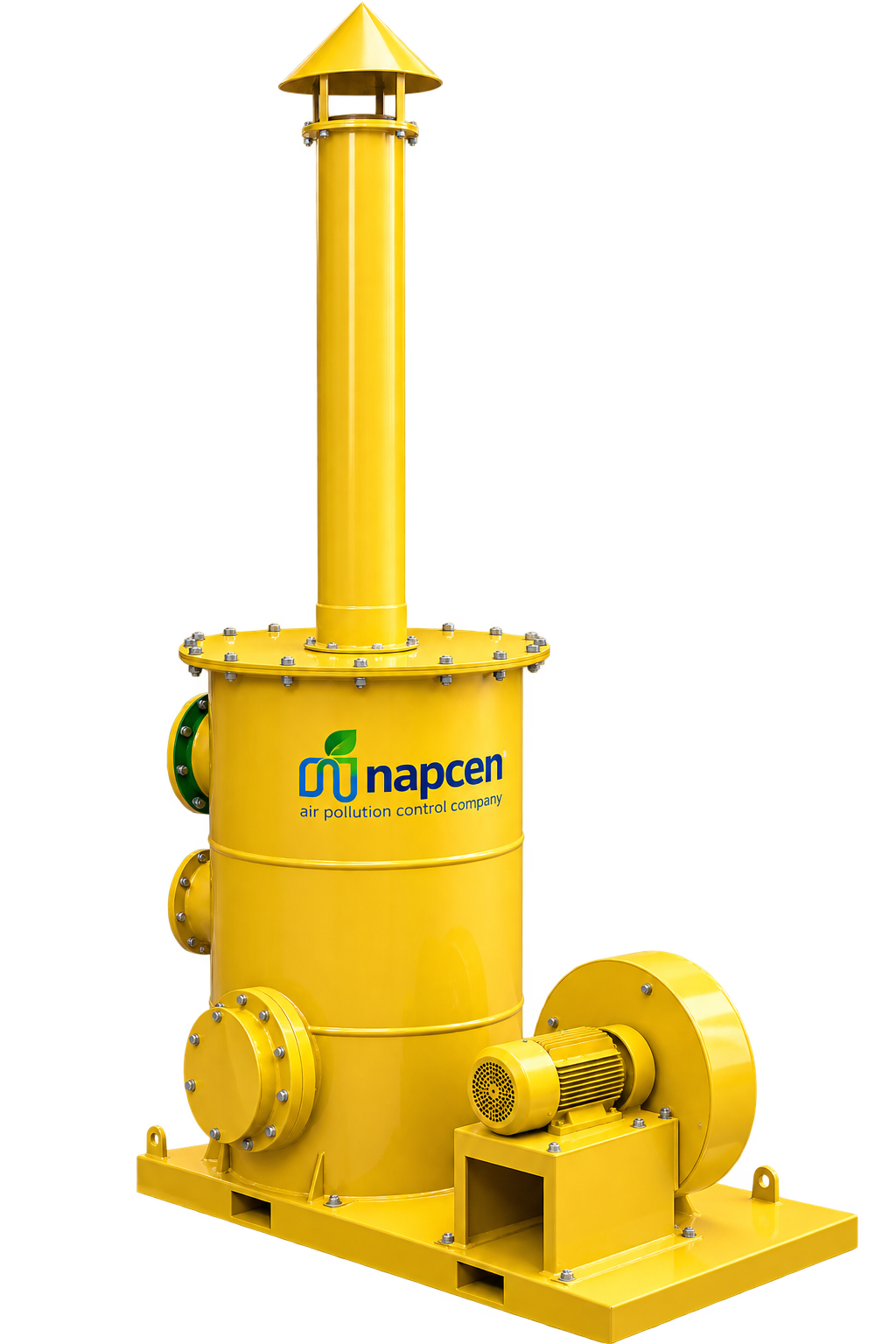
Gas and odor treatment
Dry Scrubbers
H₂S treatment, VOC adsorption, STP odor control, biogas dry scrubbers and portable systems using appropriate media.
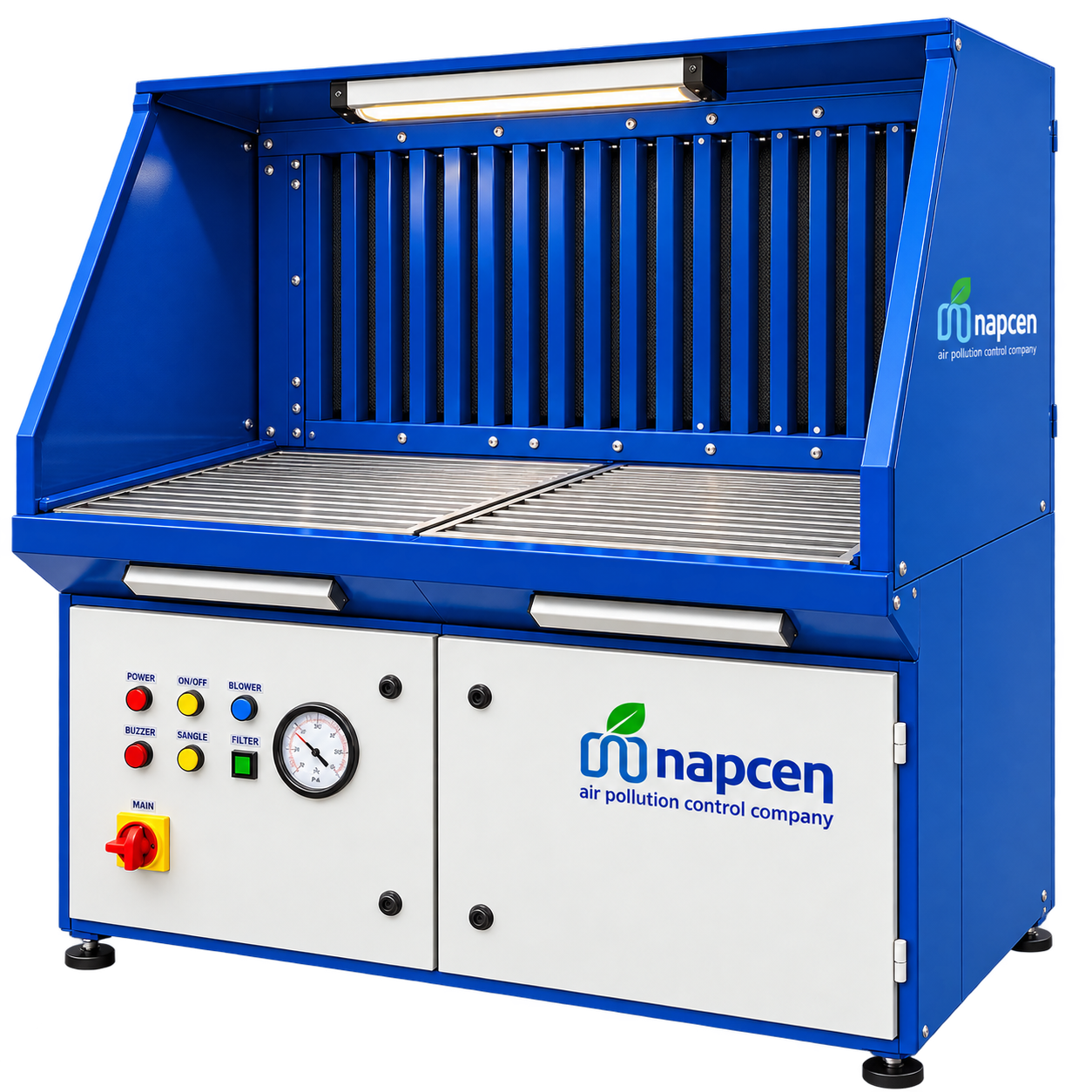
Source-level dust extraction
Downdraft Tables
Grinding, polishing, welding, woodworking and portable downdraft workstation configurations for suitable applications.
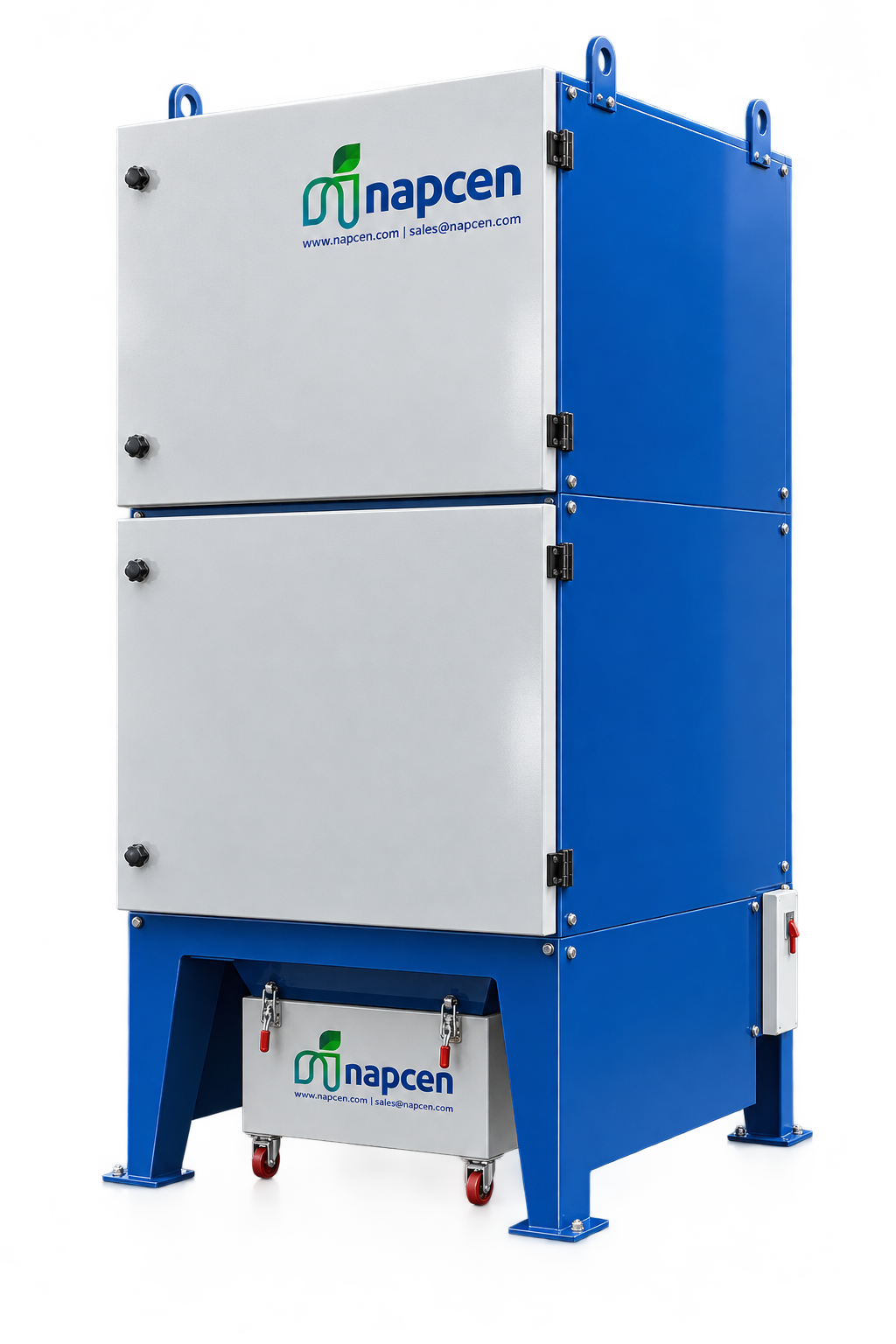
Localized industrial ventilation
Fume Extractors
Welding, laser cutting, laboratory, portable and centralized fume extraction solutions selected for the emission source.
Five equipment categories · India
Industrial Pollution Control Equipment Manufacturers Supplying Saudi Arabia
NAPCEN manufactures air pollution control equipment for industrial plants in Saudi Arabia requiring process-gas treatment, dust collection, odor reduction and source-level fume extraction. Explore equipment-specific capabilities below, then share your process conditions for a technical quotation.
01 · Scrubbing
02 · Dry Media
03 · Filtration
04 · Extraction
05 · Bench-Level
01 · Gas scrubbing for chemical and process exhaust
Industrial Wet Scrubber Manufacturers for Saudi Arabia
NAPCEN manufactures wet scrubber configurations for suitable acid fumes, ammonia, chlorine and particulate-laden exhaust. Packed bed, venturi, spray tower and application-specific systems can be evaluated according to pollutant chemistry, gas flow and liquid-treatment requirements.
Equipment types:
Packed bed scrubbers
Venturi scrubbers
Acid fume scrubbers
02 · Dry media treatment for selected gases and odors
Industrial Dry Scrubber Manufacturers for Saudi Arabia
NAPCEN supplies dry scrubber configurations for applications such as H₂S removal, biogas gas treatment, VOC adsorption and selected STP odor-control requirements. Media selection and changeout intervals depend on contaminant loading, humidity and operating conditions.
Equipment types:
H₂S dry scrubbers
VOC treatment
Biogas odor control
03 · Industrial dust filtration and extraction
Industrial Dust Collector Manufacturers for Saudi Arabia
NAPCEN manufactures dust collection systems for grinding, material handling, powder processing, woodworking and other particulate-generating processes. Baghouse, cartridge, cyclone and portable systems are selected using dust properties, airflow, filtration area and maintenance needs.
Equipment types:
Pulse jet baghouse
Cartridge
Cyclone dust collectors
04 · Fume capture near the emission source
Industrial Fume Extractor Manufacturers for Saudi Arabia
NAPCEN offers industrial fume extraction equipment for suitable welding, laser cutting, laboratory and fabrication applications. Capture hoods, extraction arms, ducting and filtration must be selected for the process and the contaminants generated.
Equipment types:
Welding fume extractors
Laser fume extractors
LEV systems
05 · Source capture at grinding and fabrication workstations
Industrial Downdraft Table Manufacturers for Saudi Arabia
NAPCEN manufactures downdraft table configurations for grinding, polishing, welding and other suitable bench-level operations. Selection considers working surface, contaminant generation, capture airflow, filtration method and operator access.
Equipment types:
Grinding downdraft tables
Polishing
Welding tables
ENGINEERING-LED EQUIPMENT SELECTION
Custom Air Pollution Control Systems for Industrial Applications
Industrial exhaust systems should be selected using actual process conditions. Equipment design can vary by gas flow, temperature, dust loading, chemical compatibility, installation layout, required outlet conditions and operating hours.
NAPCEN considers suitable materials such as MS, SS, PP and FRP according to the process and agreed project specifications. Fans, pumps, filtration media, chemical dosing and control arrangements are selected as applicable to the equipment.
Share Your Technical Requirement
Technical review includes duct sizing, static pressure calculations and supply
boundary definition.
01
01 / Flow
Gas flow / extraction volume
Specify actual m³/h or Nm³/h and operating temperature.
02
02 / Contaminant
Contaminant characteristics
Identify dust, gas or vapor composition and concentration.
03
03 / Target
Target performance
Define required outlet concentration or collection objective.
04
04 / Duty
Process duty
Provide operating hours, humidity and temperature.
05
05 / Materials
Materials & utilities
Review chemical compatibility, power and available water.
06
06 / Layout
Installation space
Provide plant layout, duct connections and site restrictions.
Industrial Applications


Application-led solutions
Industrial Wet Scrubber, Dry Scrubber, Dust Collector, Fume Extractor & Downdraft Table Solutions for Saudi Arabia
NAPCEN is an India-based manufacturer accepting Saudi Arabia industrial equipment enquiries. Each product category is selected against process specifications rather than a one-size-fits-all catalogue.
The appropriate system depends on the contaminant, process, capture method and required treatment outcome.
Application 01
Petrochemicals & Refineries
Wet scrubbing for compatible acid gases and process exhaust; design considers chemistry, temperature, materials and safety specifications.
Application 02
Oil & Gas Support Facilities
Selected process vent treatment, H₂S odor applications and workshop extraction; hazardous areas require specialized assessment.
Application 03
Mining, Minerals & Cement
Baghouse, cartridge and cyclone dust collectors for suitable crushing, conveying, loading and bulk material transfer duties.
Application 04
Steel, Aluminum & Fabrication
Localized extraction for grinding, welding, polishing and compatible metal dust; combustible and hazardous dust needs special evaluation.
Application 05
Pharmaceuticals & Chemicals
Corrosion-resistant gas scrubbers and dust collection for suitable production, transfer and exhaust applications.
Application 06
Food, Grain & Packaging
Dust collection for appropriate powder handling, packing and transfer; hygienic and explosion-risk requirements must be assessed.
Application 07
Wastewater & Odor Control
Dry media or wet chemical scrubbing for suitable H₂S and nuisance odor applications based on concentration and humidity.
Application 08
Power & Industrial Utilities
Application-specific treatment of process exhaust and particulate emissions, subject to pollutant and operating data.
Saudi industrial project considerations
Environmental, Climate and Site Requirements for Saudi Arabian Projects
Saudi industrial projects should verify applicable environmental permits, National Center for Environmental Compliance (NCEC) requirements, industrial-city conditions, and client specifications. NAPCEN does not certify regulatory compliance without project-specific engineering and testing.
NCEC and Site Permit Review
Confirm applicable environmental permits, emission limits, sampling points and monitoring obligations with the facility and competent Saudi authorities before final equipment selection.
High Ambient Temperatures and Dust
Account for summer ambient temperature, sand and dust ingress, motor cooling, filters, access for cleaning and outdoor electrical enclosures.
Red Sea and Gulf Coast Corrosion
For Jeddah, Yanbu, Jubail and coastal sites, review chloride exposure, FRP resin selection, stainless-steel grades, coatings and maintenance intervals.
Hazardous Areas and Saudi Project Standards
Oil, gas and petrochemical installations may require hazardous-area classification, approved electrical equipment, owner engineering standards and independent safety review.
Water, Utilities and Waste Streams
Wet scrubbers need a defined water source, blowdown handling, chemical dosing and wastewater disposal plan; dry systems need media replacement and waste-management procedures.
EPC Submittals and Factory Testing
Clarify datasheets, GA drawings, material certificates, inspection and test plans, FAT, packing, documentation and commissioning scope during procurement.
FROM ENQUIRY TO EQUIPMENT
Engineering, Manufacturing and
Project Support
A structured engineering-led workflow ensuring technical compliance, precision fabrication, and reliable equipment performance.
01
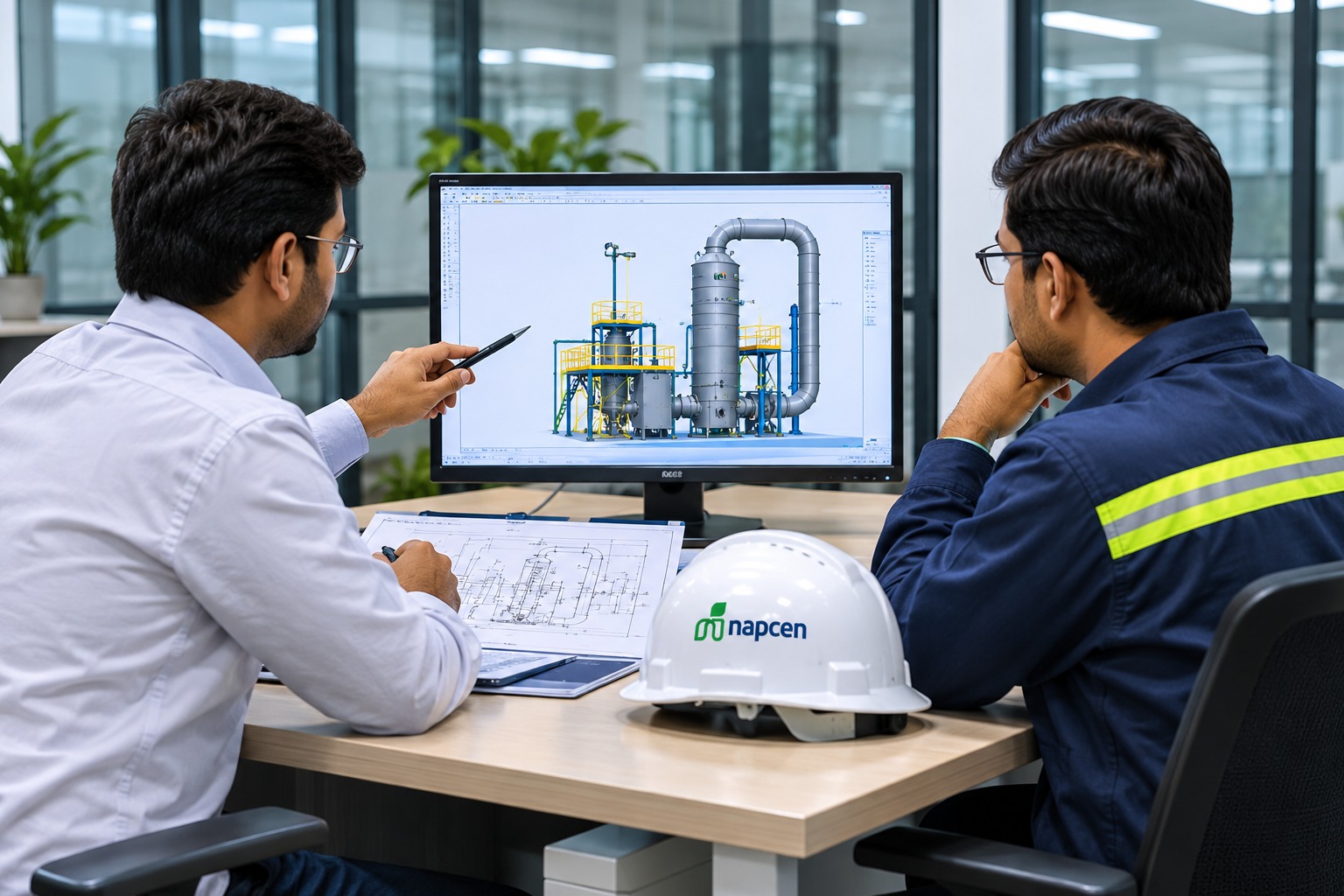
Application Review
Review process details, pollutant characteristics, airflow and installation constraints.
02
.jpeg)
Equipment Design
Develop equipment configuration, dimensional considerations and materials selection.
03
.jpeg)
Fabrication
Manufacture the agreed scrubber, dust collector or extraction equipment configuration.
04
.jpeg)
Inspection
Coordinate relevant checks and documentation as specified for the project.
05
.jpeg)
Installation Coordination
Review duct connections, access requirements and site interfaces where included in scope.
06
.jpeg)
Service Discussion
Clarify maintenance, replacement parts and after-sales support according to the equipment supplied.
Saudi Arabia-focused industrial enquiries
Air Pollution Control Equipment for Industrial Projects Across Saudi Arabia
Saudi Arabia industrial requirements vary across LNG and gas processing, petrochemical manufacturing, metalworking, infrastructure and wastewater treatment. The locations below describe relevant industrial demand centers, not NAPCEN offices or completed installations.
Jubail Industrial City
Petrochemicals, refining, chemical production and utilities; engineered wet scrubbers, dust collection and local exhaust systems.
Yanbu Industrial City
Refining, petrochemicals, metals and industrial maintenance; corrosion-resistant scrubbers and dust extraction.
Riyadh Industrial Cities
Manufacturing, powder coating, machining, woodworking and fabrication; cartridge collectors, fume extractors and downdraft tables.
Dammam & Second Industrial City
Metalworking, foundries, chemical processing and industrial workshops; particulate and fume capture solutions.
Jeddah Industrial Cities
Food processing, fabrication, packaging and coastal industrial operations; dust control and process ventilation.
Ras Al Khair
Mining and minerals processing, aluminum and heavy industrial facilities; engineered particulate capture and gas treatment.
Rabigh
Refining, petrochemicals and industrial utilities; application-specific gas treatment and exhaust systems.
Jazan Industrial City
Energy, refining and industrial development; emission-control equipment subject to project specifications.
PROCUREMENT SUPPORT
How to Choose an Industrial Air Pollution Control Equipment Supplier for Saudi Arabian
01
Evaluate Technical Fit
Compare process conditions, contaminant characteristics, required airflow, pressure drop, expected maintenance and material compatibility.
02
Review the Total System Scope
Clarify whether the offer includes hoods, ducting, blower, filters, pumps, controls, stack, installation or commissioning.
03
Request Clear Documentation
Ask for dimensional drawings, utility requirements, operating assumptions, inspection scope and recommended maintenance.
04
Assess Lifecycle Requirements
Consider consumables, pressure drop, energy use, access for maintenance and spare-parts availability—not just initial purchase cost.
Frequently Asked Questions
Air Pollution Control Equipment in Saudi Arabia – FAQs
-
Does NAPCEN supply air pollution control equipment to Saudi Arabia?NAPCEN is an India-based manufacturer that accepts Saudi project enquiries. Equipment supply, shipping destination, applicable documentation and any site services are confirmed case by case in the quotation.
-
What scrubber is suitable for Jubail petrochemical or refinery process exhaust?Selection depends on the contaminants, gas flow, temperature, corrosivity, required outlet concentration and owner standards. Packed-bed wet scrubbers or other technologies may be considered after reviewing the process datasheet.
-
Which dust collector is appropriate for cement and mineral handling in Saudi Arabia?Baghouse, cartridge or cyclone arrangements may suit different particle sizes, dust loads and airflows. Abrasion, ambient dust, pressure drop and combustible dust hazards must be evaluated.
-
Can equipment be designed for Saudi Arabia’s high temperatures and sand exposure?Yes, design review can consider high ambient temperature, dust ingress, enclosure ratings, filtration, access and outdoor service. Final materials and ratings depend on site design conditions.
-
How do Saudi environmental requirements affect scrubber sizing?The facility should confirm applicable NCEC requirements, permit conditions, emission limits and monitoring obligations. Equipment is sized against documented inlet conditions and agreed performance criteria; regulatory approval is not automatic.
-
Can NAPCEN design corrosion-resistant equipment for Yanbu or Jeddah coastal sites?FRP, PP and selected metallic materials can be evaluated based on pollutant chemistry, salt exposure, temperature and mechanical duty. Final material selection requires engineering verification.
-
Can dry scrubbers treat H₂S odors from Saudi wastewater treatment plants?Suitable adsorption or reactive-media systems may be evaluated after receiving H₂S concentration, airflow, humidity, operating hours and outlet targets. Media life depends on actual loading and conditions.
-
What documents should Saudi EPC contractors provide for a quotation?Share the equipment datasheet, process composition, actual and normal airflow, temperature, pressure, site location, owner specifications, utilities, materials preference, layout and required inspections.
-
Are NAPCEN systems automatically approved for Saudi Aramco, SABIC or other owner projects?No. Each project must be reviewed against the applicable owner and EPC specifications, vendor qualification requirements and inspection procedures. No approval or vendor registration is implied.
-
Does NAPCEN provide installation, commissioning or spare parts in Saudi Arabia?The quotation can discuss documentation, spare parts, remote engineering coordination and potential site-support arrangements. Local installation, commissioning and maintenance scope must be confirmed before order placement.
GET A TECHNICAL QUOTATION
Looking for an Industrial Air Pollution Control Solution?
Tell NAPCEN about your dust collection, gas scrubbing, odor treatment or fume extraction requirements. Share process details, equipment specifications and project location for a technical quotation discussion.
Email: sales@napcen.com
Location: Puducherry, India
STEP 1 OF 2 · YOUR APPLICATION
Request an engineered quotation
Tell us what your process generates. Approximate values are welcome.
Quick Response
Expert Support
Custom Solutions