
- Address: Villianur, Puducherry-605110
- Email: sales@napcen.com
NAPCEN · Industrial Equipment Manufacturer · Sri Lanka Enquiries
Air Pollution Control Equipment Suppliers for Sri Lanka
Industrial wet scrubber, dry scrubber, dust collector, fume extractor and downdraft table solutions for Sri Lanka’s apparel, textile processing, rubber products, food processing, ceramics, metal fabrication and manufacturing industries.
From chemical exhaust treatment to grinding dust collection, NAPCEN helps industrial buyers identify suitable equipment based on airflow, pollutant characteristics, operating conditions and project requirements.
Made in India
Industrial Applications
Custom Equipment Configurations
Technical Sales Support
INDUSTRIAL MANUFACTURER IN INDIA
NAPCEN – Air Pollution Control Systems for Sri Lanka Industries
NAPCEN is an industrial air pollution control equipment manufacturer based in Puducherry, India. We welcome enquiries from Sri Lanka for wet scrubbers, dry scrubbers, dust collectors, fume extractors and downdraft tables. Our application-based approach considers gas composition, dust loading, airflow, operating temperature and materials of construction.
Industrial facilities in Sri Lanka have different emission sources and operating conditions. We review the application, contaminant characteristics, required airflow, installation constraints and materials of construction before recommending an equipment configuration.
Our aim is to support plant engineers, EHS teams, procurement professionals and project consultants with practical equipment selection and technical quotation support.
What this page covers
Five core equipment families, selection guidance, applications, engineering considerations, industrial locations in India, and an inquiry form designed for technical buyers.
Our product portfolio
Wet Scrubber, Dry Scrubber, Dust Collector, Fume Extractor & Downdraft Table Suppliers for Sri Lanka
Explore NAPCEN equipment families for manufacturing plants, process industries and fabrication facilities. Select the system according to the emission source—not only the equipment name.
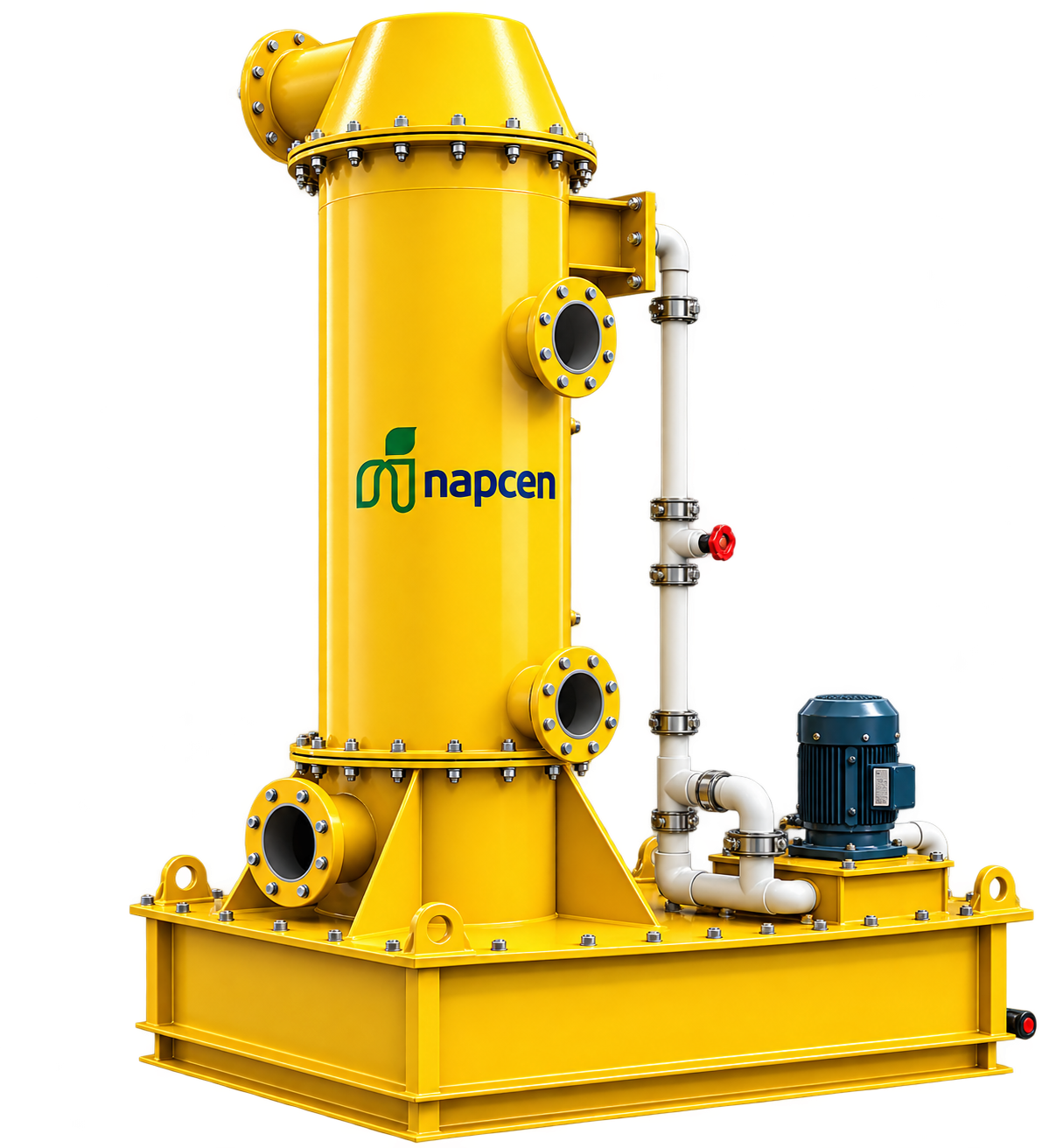
Gas absorption & particulate scrubbing
Wet Scrubbers
Packed bed, venturi, acid fume, HCl, chlorine, ammonia and vent gas scrubber configurations for suitable industrial exhaust streams.
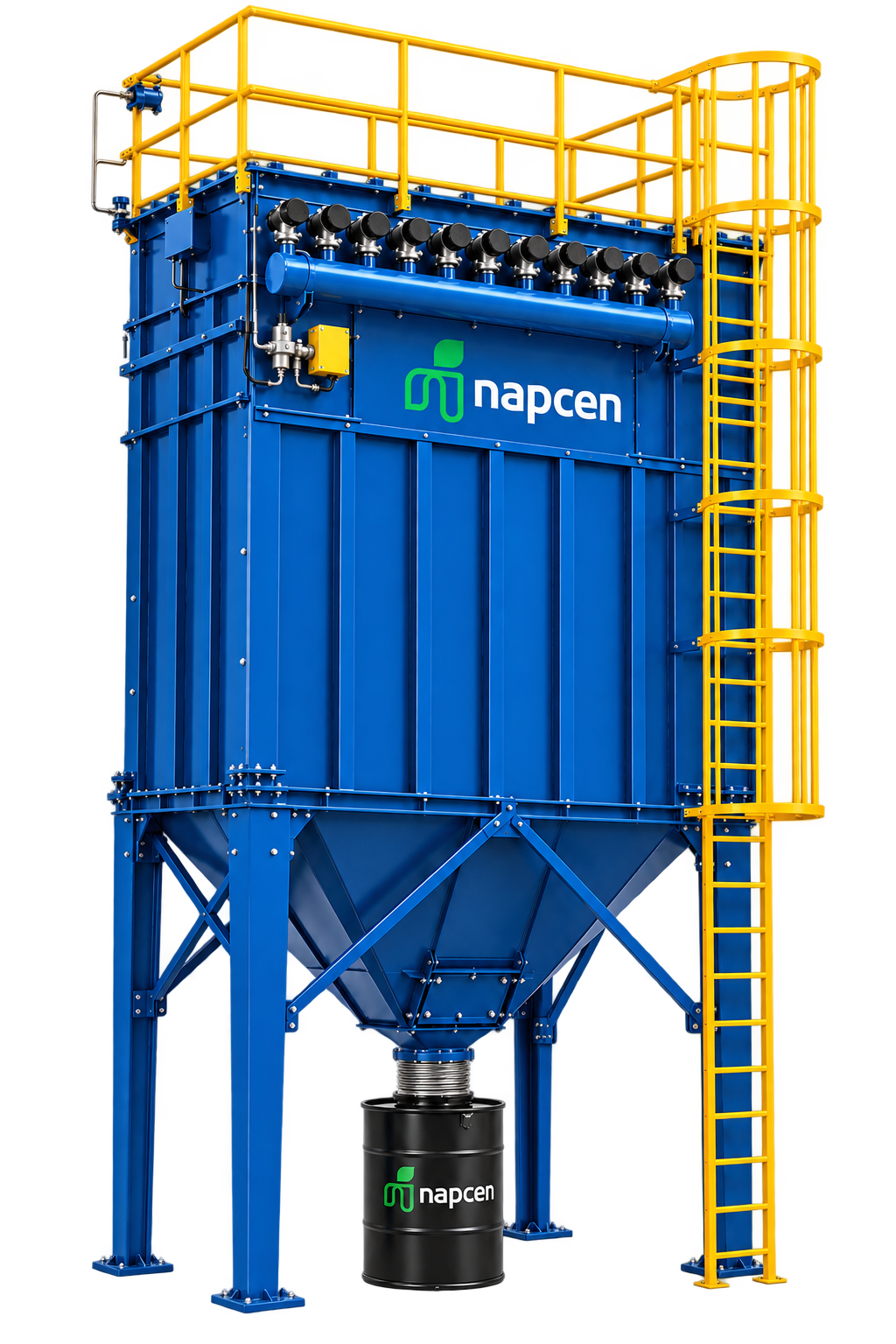
Industrial particulate filtration
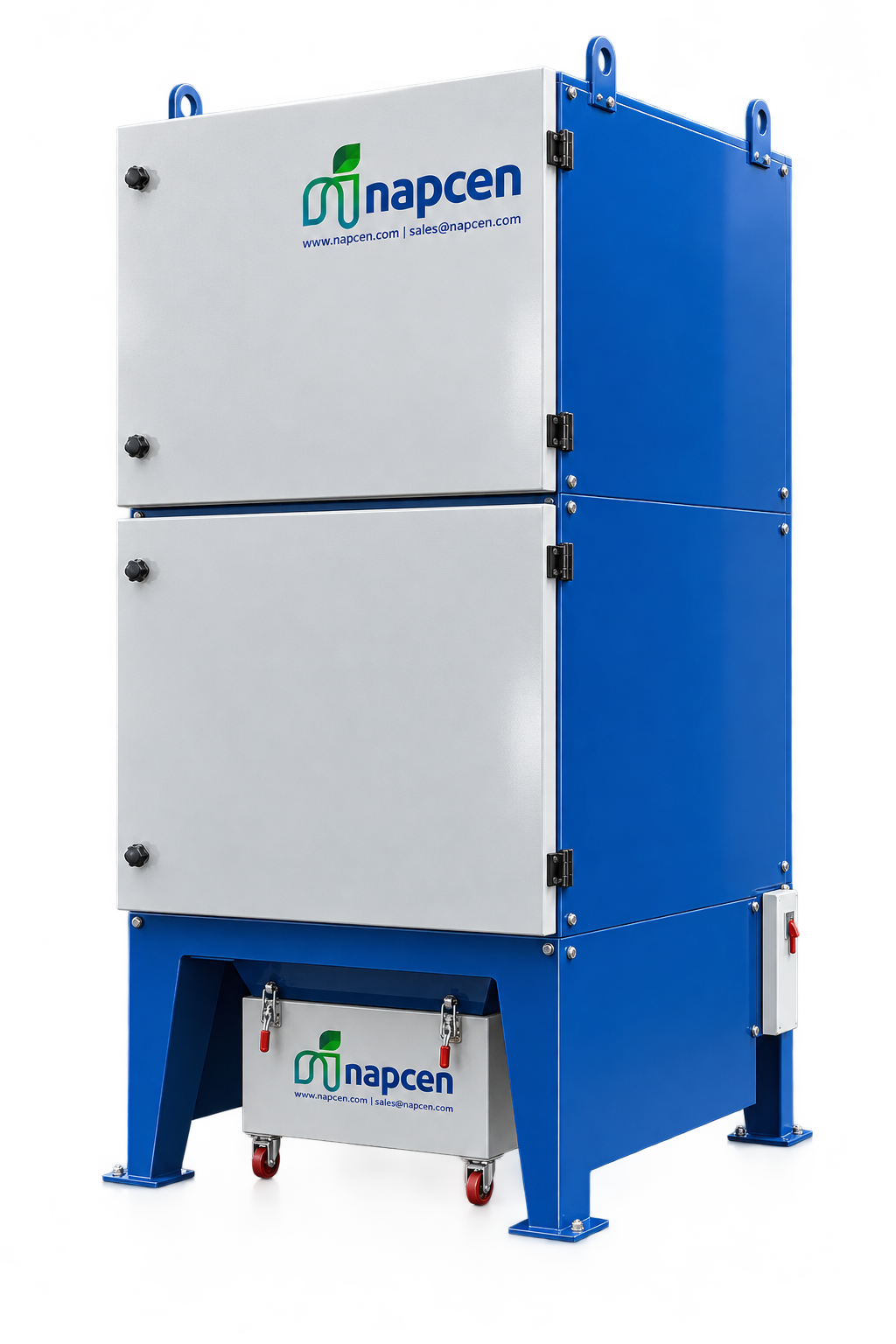
Dust Collectors
Pulse jet baghouse, cartridge, cyclone, portable and two-stage dust collection systems for process dust and material handling.
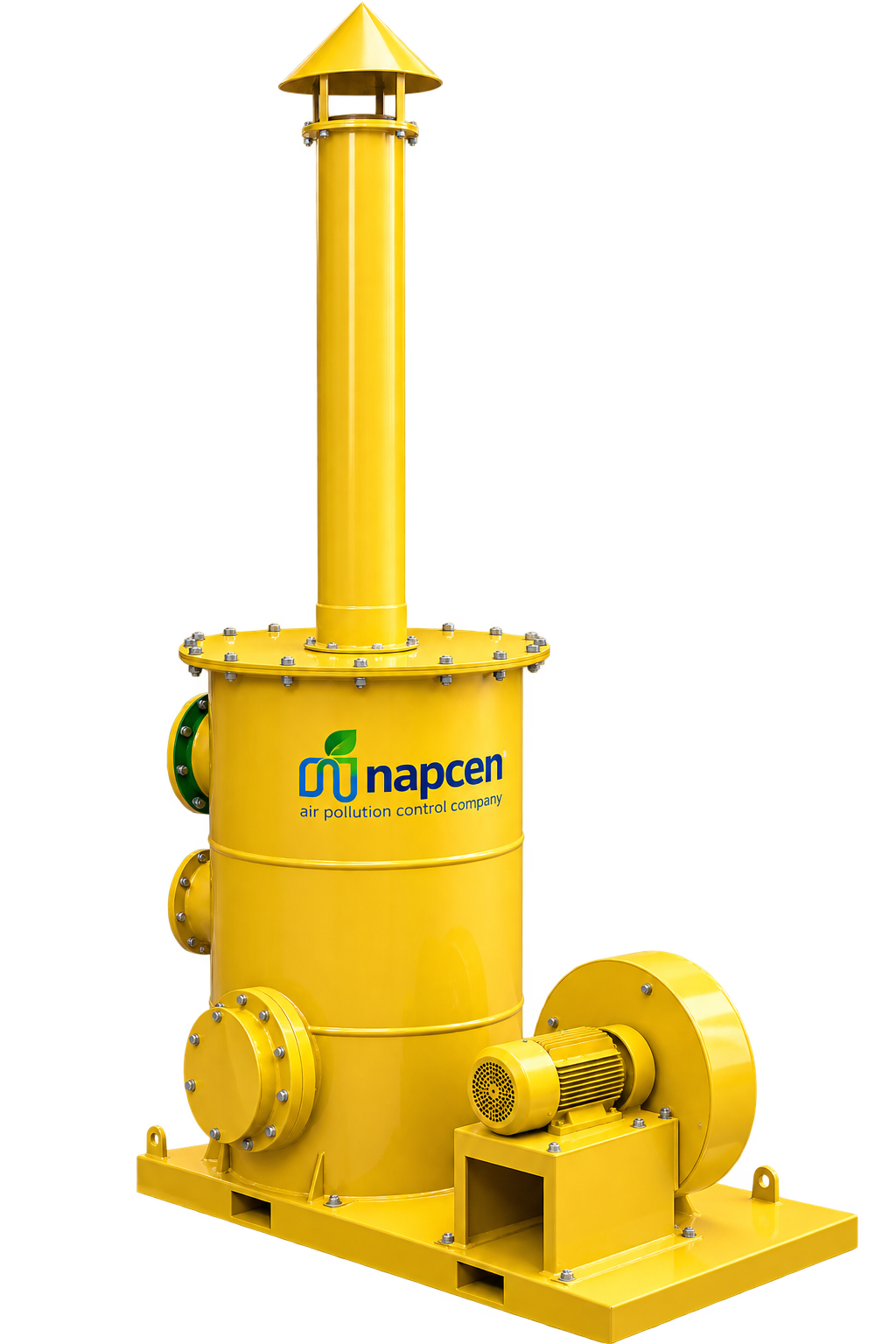
Gas and odor treatment
Dry Scrubbers
H₂S treatment, VOC adsorption, STP odor control, biogas dry scrubbers and portable systems using appropriate media.
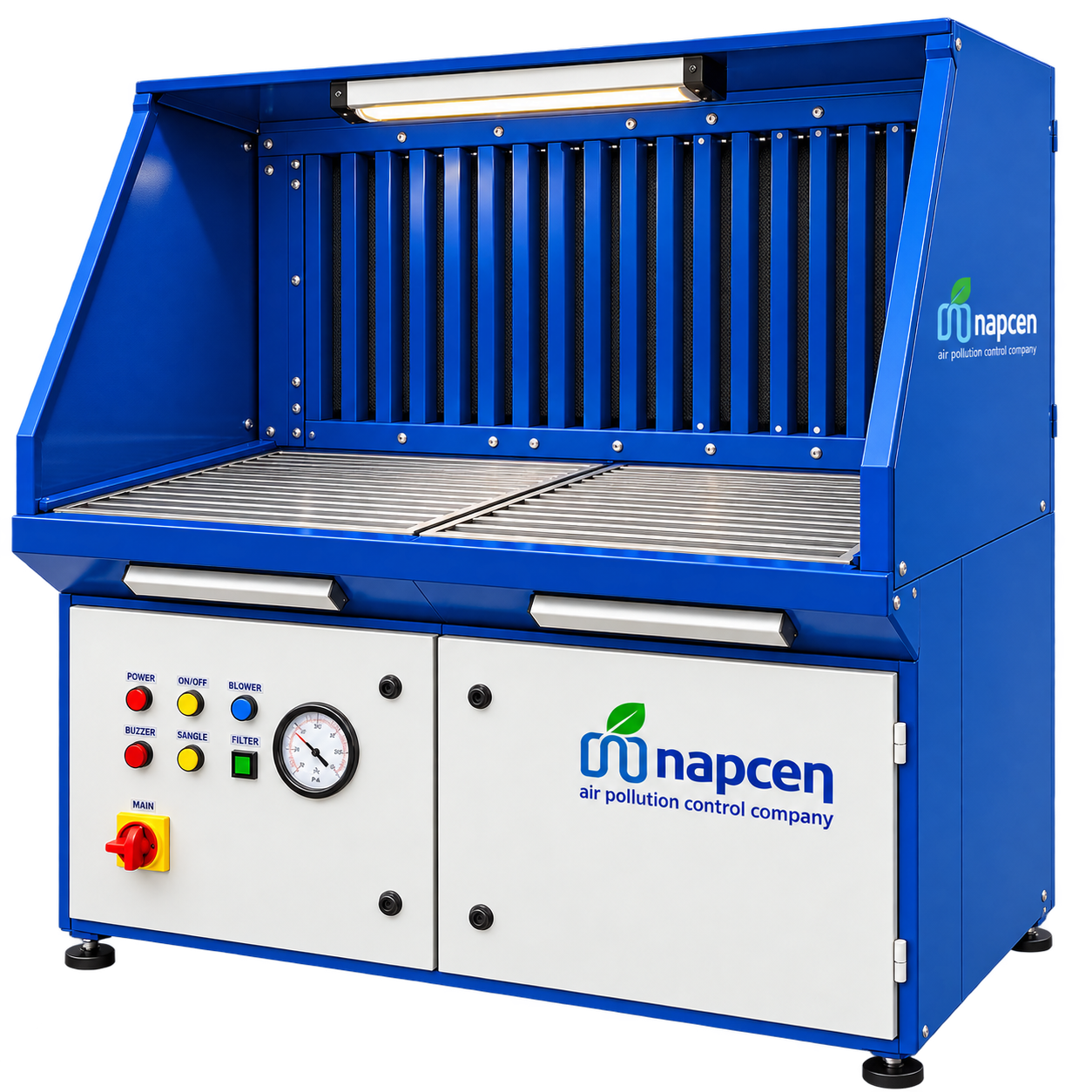
Source-level dust extraction
Downdraft Tables
Grinding, polishing, welding, woodworking and portable downdraft workstation configurations for suitable applications.
Localized industrial ventilation
Fume Extractors
Welding, laser cutting, laboratory, portable and centralized fume extraction solutions selected for the emission source.
Five equipment categories · India-based manufacturing
Industrial Pollution Control Equipment Manufacturers Supplying Sri Lanka
NAPCEN manufactures air pollution control equipment for industrial plants in Sri Lanka requiring process-gas treatment, dust collection, odor reduction and source-level fume extraction. Explore equipment-specific capabilities below, then share your process conditions for a technical quotation.
01 · Scrubbing
02 · Dry Media
03 · Filtration
04 · Extraction
05 · Bench-Level
01 · Gas scrubbing for chemical and process exhaust
Industrial Wet Scrubber Manufacturers for Sri Lanka
NAPCEN manufactures wet scrubber configurations for suitable acid fumes, ammonia, chlorine and particulate-laden exhaust. Packed bed, venturi, spray tower and application-specific systems can be evaluated according to pollutant chemistry, gas flow and liquid-treatment requirements.
Equipment types:
Packed bed scrubbers
Venturi scrubbers
Acid fume scrubbers
02 · Dry media treatment for selected gases and odors
Industrial Dry Scrubber Manufacturers for Sri Lanka
NAPCEN supplies dry scrubber configurations for applications such as H₂S removal, biogas gas treatment, VOC adsorption and selected STP odor-control requirements. Media selection and changeout intervals depend on contaminant loading, humidity and operating conditions.
Equipment types:
H₂S dry scrubbers
VOC treatment
Biogas odor control
03 · Industrial dust filtration and extraction
Industrial Dust Collector Manufacturers for Sri Lanka
NAPCEN manufactures dust collection systems for grinding, material handling, powder processing, woodworking and other particulate-generating processes. Baghouse, cartridge, cyclone and portable systems are selected using dust properties, airflow, filtration area and maintenance needs.
Equipment types:
Pulse jet baghouse
Cartridge
Cyclone dust collectors
04 · Fume capture near the emission source
Industrial Fume Extractor Manufacturers for Sri Lanka
NAPCEN offers industrial fume extraction equipment for suitable welding, laser cutting, laboratory and fabrication applications. Capture hoods, extraction arms, ducting and filtration must be selected for the process and the contaminants generated.
Equipment types:
Welding fume extractors
Laser fume extractors
LEV systems
05 · Source capture at grinding and fabrication workstations
Industrial Downdraft Table Manufacturers for Sri Lanka
NAPCEN manufactures downdraft table configurations for grinding, polishing, welding and other suitable bench-level operations. Selection considers working surface, contaminant generation, capture airflow, filtration method and operator access.
Equipment types:
Grinding downdraft tables
Polishing
Welding tables
ENGINEERING-LED EQUIPMENT SELECTION
Custom Air Pollution Control Systems for Industrial Applications
Industrial exhaust systems should be selected using actual process conditions. Equipment design can vary by gas flow, temperature, dust loading, chemical compatibility, installation layout, required outlet conditions and operating hours.
NAPCEN considers suitable materials such as MS, SS, PP and FRP according to the process and agreed project specifications. Fans, pumps, filtration media, chemical dosing and control arrangements are selected as applicable to the equipment.
Share Your Technical Requirement
Technical review includes duct sizing, static pressure calculations and supply
boundary definition.
01
01 / Flow
Gas flow / extraction volume
Specify actual m³/h or Nm³/h and operating temperature.
02
02 / Contaminant
Contaminant characteristics
Identify dust, gas or vapor composition and concentration.
03
03 / Target
Target performance
Define required outlet concentration or collection objective.
04
04 / Duty
Process duty
Provide operating hours, humidity and temperature.
05
05 / Materials
Materials & utilities
Review chemical compatibility, power and available water.
06
06 / Layout
Installation space
Provide plant layout, duct connections and site restrictions.
Industrial Applications


Application-led solutions
Air Pollution Control Solutions for Sri Lanka Industrial Sectors
The appropriate system depends on the contaminant, process, capture method and required treatment outcome.
Application 01
Apparel & Textile Processing
Wet scrubber evaluation for suitable dyeing, chemical handling and textile-process exhaust; source capture and effluent handling must be engineered.
Application 02
Rubber & Tyre Manufacturing
Dust collection and localized fume capture for appropriate rubber compounding, powder handling and process operations.
Application 03
Tea, Food & Agricultural Processing
Dust extraction for tea handling, flour, spices, grain transfer, packaging and other particulate-generating processes, subject to food-safety and dust hazard review.
Application 04
Ceramics, Tiles & Mineral Products
Baghouse, cartridge or cyclone equipment for appropriate grinding, crushing, powder conveying and ceramic manufacturing emissions.
Application 05
Metal Fabrication & Engineering
Welding fume extractors, downdraft tables and dust collectors for cutting, grinding, polishing and fabrication workshops.
Application 06
Chemical, Paint & Pharmaceutical
Application-specific wet or dry gas treatment and local exhaust for suitable process emissions; chemical compatibility is essential.
Application 07
Water & Wastewater Treatment
Dry media odor-control systems for suitable H₂S and other odor applications at sewage and industrial wastewater facilities.
Application 08
Ports, Ship Repair & Logistics
Welding fume extraction, workshop dust capture and corrosion-aware equipment selection for coastal industrial facilities.
Application 09
Packaging, Printing & General Manufacturing
Source-level extraction and particulate control for selected printing, packaging, blending and factory processes.
Sri Lanka industrial project considerations
Environmental, Climate and Site Requirements for Sri Lanka Industrial Projects
Sri Lankan project owners should verify applicable Central Environmental Authority (CEA) requirements, Environmental Protection Licence (EPL) conditions, air-emission limits and any local authority or Board of Investment conditions. Final compliance depends on site-specific approval and measured performance.
Central Environmental Authority & Environmental Protection Licence
Confirm applicable environmental permits, discharge limits, monitoring and reporting obligations with the project owner and qualified local advisers.
Heat, Dust & Coastal Corrosion
Define outdoor ambient temperature, airborne sand/dust, humidity, salt exposure, protective coatings and electrical enclosure requirements.
Process Safety, Combustible Dust & Ventilation
Identify hazardous-area classifications, combustible dust or vapors, fire and explosion hazards, and client engineering standards before finalizing equipment.
FROM ENQUIRY TO EQUIPMENT
Engineering, Manufacturing and
Project Support
A structured engineering-led workflow ensuring technical compliance, precision fabrication, and reliable equipment performance.
01
Application Review
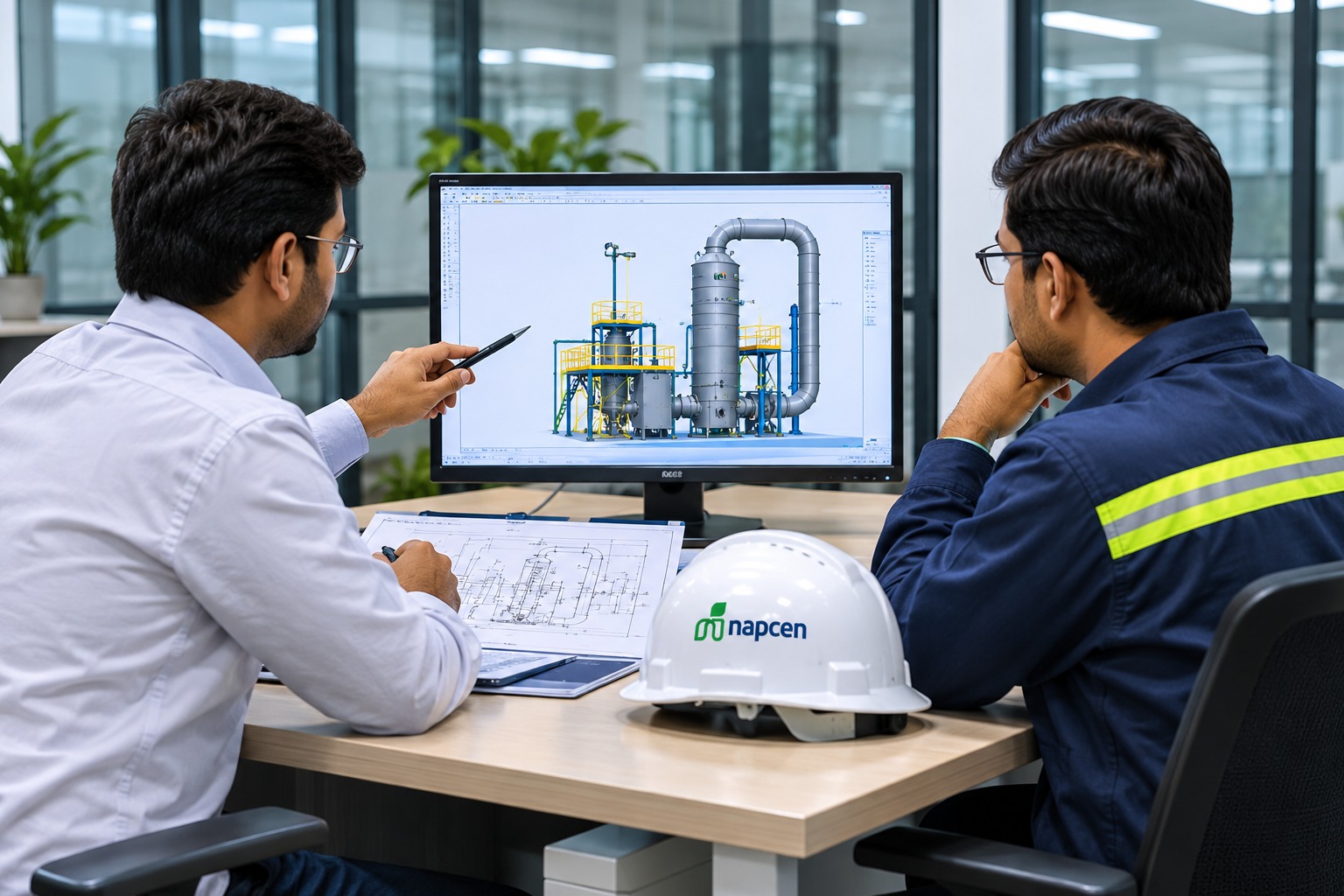
Review process details, pollutant characteristics, airflow and installation constraints.
02
.jpeg)
Equipment Design
Develop equipment configuration, dimensional considerations and materials selection.
03
.jpeg)
Fabrication
Manufacture the agreed scrubber, dust collector or extraction equipment configuration.
04
.jpeg)
Inspection
Coordinate relevant checks and documentation as specified for the project.
05
.jpeg)
Installation Coordination
Review duct connections, access requirements and site interfaces where included in scope.
06
.jpeg)
Service Discussion
Clarify maintenance, replacement parts and after-sales support according to the equipment supplied.
Sri Lanka-focused industrial enquiries
Air Pollution Control Equipment for Industrial Projects Across Sri Lanka
NAPCEN manufactures equipment in Puducherry, India, and welcomes technical enquiries for Sri Lanka industrial projects. The areas below identify customer application markets, not NAPCEN branch offices or verified installations.
Colombo & Greater Colombo
Industrial manufacturing, fabrication, printing, pharmaceutical and process ventilation enquiries across the commercial region.
Biyagama Export Processing Zone
Apparel, rubber products, electronics and manufacturing projects requiring process exhaust or particulate capture.
Katunayake & Seeduwa
Export-oriented manufacturing, engineering workshops, packaging and local exhaust ventilation applications.
Horana & Ingiriya
Industrial processing, rubber, chemicals and manufacturing facilities requiring project-specific scrubber and dust collection assessment.
Kandy & Pallekele
Food, tea, precision manufacturing and engineering workshop extraction requirements.
Galle, Matara & Southern Province
Apparel, food processing, marine fabrication, wastewater odor and coastal-corrosion-aware installations.
Kurunegala & North Western Province
Agricultural processing, rubber, ceramics, powder handling and industrial dust extraction.
Hambantota & Trincomalee
Port-linked industry, workshops, material handling and infrastructure-related air pollution control enquiries.
Sri Lanka procurement guidance
Technical Procurement Checklist for Sri Lanka Industrial Buyers & EPC Contractors
01
Design Gas & Dust Data
Provide actual/normal airflow, gas composition, concentration, particulate properties, temperature, humidity and operating pressure.
02
Materials & Corrosion Resistance
Specify chemical compatibility, ambient salinity, coatings and preferred FRP, PP, stainless steel or carbon steel materials.
03
Performance & Documentation
Agree outlet targets, pressure drop, motor and instrumentation details, drawings, inspection records and acceptance criteria.
04
Hazardous Areas & Process Safety
Disclose explosive atmospheres, flammable gases and combustible dust so specialist engineering safeguards can be assessed.
05
Export & Delivery Scope
Confirm Incoterms, shipment dimensions, packing, customs responsibility, delivery location and installation or commissioning scope.
06
Lifecycle & Maintenance
Plan filter or media replacement, spare parts, utility consumption, inspection access and maintenance responsibilities.
Frequently Asked Questions
Air Pollution Control Equipment in Sri Lanka – FAQs
-
Can NAPCEN supply wet scrubbers and dust collectors from India to Sri Lanka?NAPCEN manufactures in Puducherry, India and accepts Sri Lankan industrial RFQs. Export packing, shipping terms, import clearance, local installation and service responsibilities are confirmed project by project.
-
Which equipment is suitable for textile dyeing and finishing exhaust in Sri Lanka?The correct system depends on the actual chemical emissions, temperature, humidity, gas flow and required outlet conditions. Wet scrubbing may suit certain soluble gases; mist, VOC and particulate duties may require other technologies or pretreatment.
-
How should a rubber or tyre factory select a dust collector?Share powder composition, particle size, loading, operating temperature, extraction points and duty cycle. Filtration and fire/explosion safeguards require assessment, especially for combustible materials.
-
What should Sri Lankan manufacturers know about CEA air-emission requirements?The Central Environmental Authority and applicable local agencies set or administer project-specific environmental requirements, including EPL conditions where applicable. Buyers should verify current permits and limits with qualified local professionals; equipment alone does not guarantee compliance.
-
Can NAPCEN design dust extraction for tea, flour and spice processing?Baghouse, cartridge or cyclone systems may be assessed for suitable dry powder operations. Hygienic design, product contamination, moisture, combustible dust and cleaning requirements must be reviewed before selection.
-
Which scrubber suits wastewater H₂S and odor control in Sri Lanka?Suitable dry-media systems may be considered after checking H₂S concentration, airflow, humidity, competing contaminants and expected media life. Wet treatment may be considered where process conditions justify it.
-
How does Sri Lanka’s tropical climate affect APC equipment design?High humidity, monsoon rain and coastal salinity can influence material selection, weather protection, condensate drainage, electrical enclosure ratings and maintenance intervals.
-
What information should a Sri Lankan EPC contractor include in an RFQ?Provide process description, location, gas or dust composition, flowrate, temperature, operating hours, target outlet criteria, site drawings, material preferences, utility availability and required documents.
-
Can NAPCEN customize equipment for restricted factory space in Colombo or export zones?Dimensions, access, inlet and outlet orientation, duct interfaces and maintenance clearance can be reviewed for a custom configuration. Final feasibility depends on design pressure drop and performance requirements.
-
Are commissioning, spare parts and installation included for Sri Lankan orders?These are not automatically included. The quotation should clearly define equipment supply, export delivery terms, installation, commissioning support, spares, training and any local service arrangements.
GET A TECHNICAL QUOTATION
Looking for an Industrial Air Pollution Control Solution?
Tell NAPCEN about your dust collection, gas scrubbing, odor treatment or fume extraction requirements. Share process details, equipment specifications and project location for a technical quotation discussion.
Email: sales@napcen.com
Location: Puducherry, India
STEP 1 OF 2 · YOUR APPLICATION
Request an engineered quotation
Tell us what your process generates. Approximate values are welcome.
Quick Response
Expert Support
Custom Solutions